


An Ode to Okonomiyaki
Okonomiyaki roughly translates to “grilled as you like it.” It usually gets described as a Japanese savory pancake, but that undersells it. It’s mostly cabbage, held together with a little batter, then finished with a sweet and tangy sauce, mayo, seaweed flakes, and bonito shavings that curl in the heat.
It’s a strange dish, and I love it.
Where it started for me
My first real okonomiyaki was in Osaka, at a small family-run restaurant called Okonomiyaki PROKO in the Nakazakicho neighborhood. We had the Kansai style, Osaka’s hometown version, where everything is mixed in one bowl and cooked as a single thick round.
Two styles
Osaka mixes. Hiroshima stacks.
Hiroshima style is built in layers on the griddle: a thin crepe of batter, a pile of cabbage, bean sprouts, pork belly, noodles, and egg. In Hiroshima, nobody calls it “Hiroshima style.” It’s just okonomiyaki.
It grew out of a cheap prewar snack called issen yoshoku, or “one-cent Western food.” After the war, with food scarce, street vendors layered whatever they could find onto flour pancakes. The stacking came from necessity, and it became the city’s signature dish.
Bringing it home
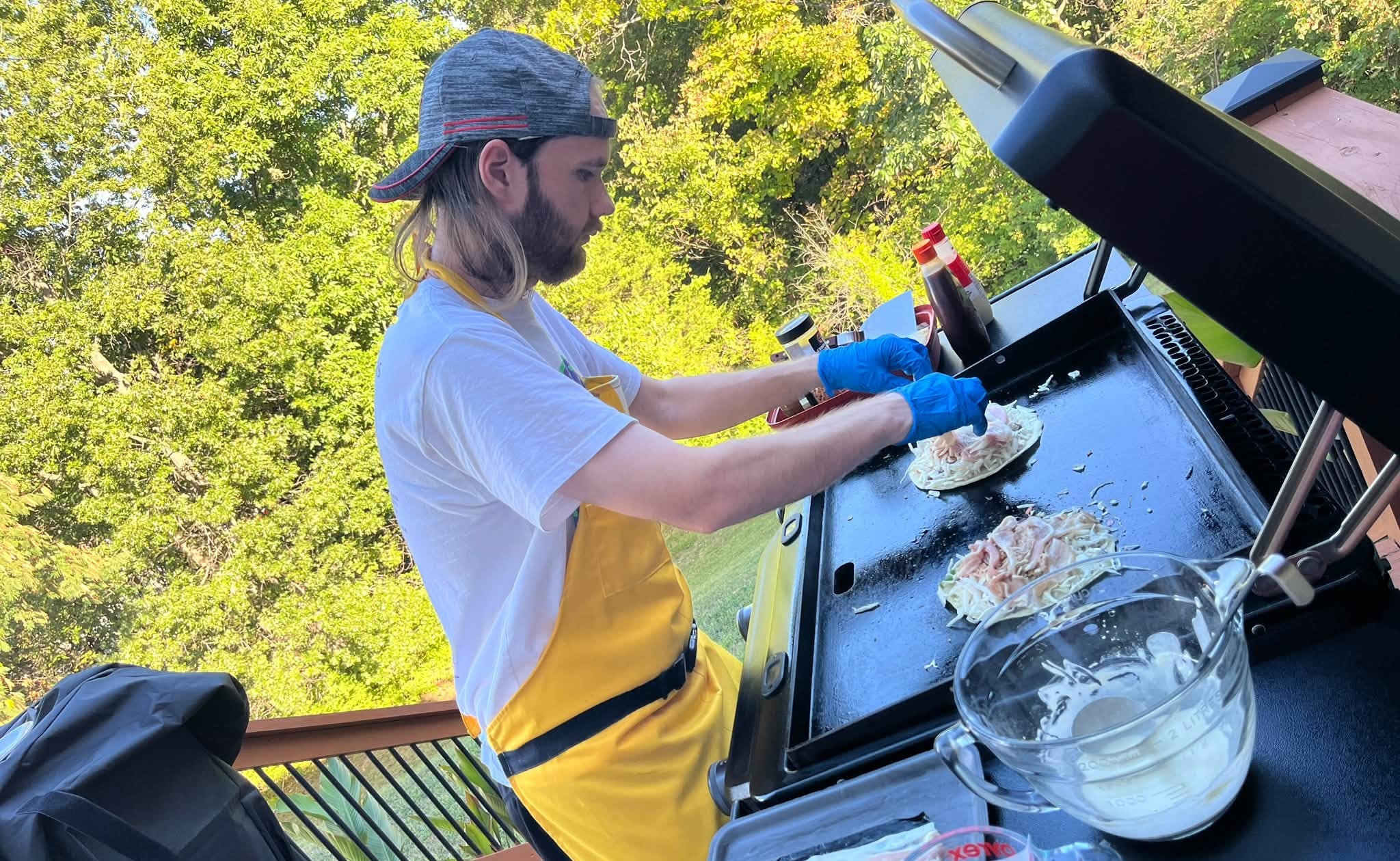
One of my favorite traditions is to bring home dishes or foods from my various travels. For example, I occasionally make SPAM Musubi or Poutine for dinner. Naturally, I’ve been missing Japan and I decided to try making Hiroshima style on my new griddle.
I picked up the ingredients at my favorite local shop, Global Foods Market in Kirkwood, a family-owned international grocery that’s been around since 1999. I can be seen frequenting this place as I consistently do a run on their Pepsi Refresh Shots (Why you might ask? That might be a story for another time).
For tools, I imported a set of okonomiyaki turners from KAMA-ASA, a kitchenware shop on Tokyo’s Kappabashi Street that’s been in business since 1908. Another thing on a return trip is to actually make it to their brick-and-mortar location. Even though I love cooking I somehow missed Kappabashi.
Anyway…
The hardest part of Hiroshima style is the flip. You’ve built a tall, loose stack on a thin crepe, and it has to go over in one clean motion. I managed it without wrecking anything.
It turned out better than I expected and is close enough to hold me over until I get back to Japan. Definitely a recipe to save for another time.


